
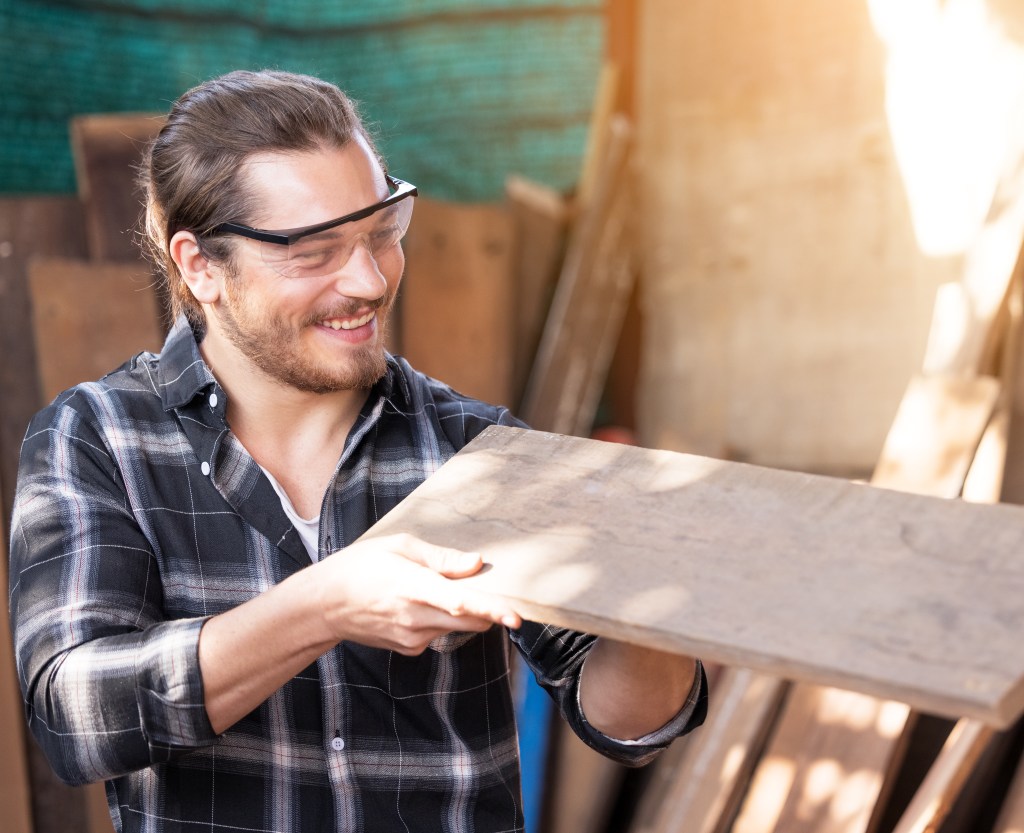
At Arch Industry, we understand that selecting the right timber for your project is crucial for its success. Timber materials come in various grades, each suited to different applications based on factors like strength, appearance, and cost. Here’s a guide to understanding timber grades and the best choices for your needs, along with how these materials can be applied to your specific projects and shaped into various forms.
1. MDF (Medium Density Fibreboard)
MDF is ideal for projects that require a smooth, paintable surface. It is often used in the manufacturing of custom furniture, cabinetry, moldings, and interior decor items like wall panels and cabinetry doors. Due to its consistency, MDF is perfect for detailed carving and intricate shapes, such as decorative trim or intricate cabinet designs. MDF can be easily shaped using routers, jigs, or CNC machines. It can be cut, routed, and molded into precise, intricate shapes. It’s also excellent for veneering or laminating to achieve a high-quality finish.
2. Plywood
Plywood is used in a wide range of applications, from structural components such as flooring, walls, and roofing to furniture-making. It’s commonly used for custom cabinetry, shelves, furniture, and panels. High-quality plywood (such as A-grade) is often used for visible, finished surfaces, while lower-grade plywood is used for interior construction elements. Plywood can be cut, bent, and laminated into custom shapes. It’s flexible enough to be used in curved designs and can be formed into complex shapes with the right equipment, such as CNC routers or press-bending for curved edges. Plywood is also easy to join using screws or nails and can be shaped with precision for fine joinery.
3. Hardwood
Hardwood is often used for premium furniture, cabinetry, flooring, and fine woodworking projects due to its natural beauty and strength. Common hardwoods like oak, walnut, and maple are popular choices for high-end tables, cabinets, chairs, and doors.
4. Softwood
Softwood, such as pine, spruce, and fir, is commonly used in structural applications such as framing, flooring, and roof trusses. It is also used for less visible furniture components, shelving, and paneling. Softwood is an affordable material for mass-produced furniture or construction.
5. Particleboard
Particleboard is often used for affordable furniture, cabinetry, and shelving. It’s commonly used in flat-pack furniture due to its cost-effectiveness and ease of mass production. Additionally, it’s used for interior panels and underlayment. Particleboard can be cut into simple shapes, drilled, and veneered to achieve the desired finish. While it does not have the same strength as solid wood, it can be molded and shaped into various forms when paired with veneers or laminates. CNC machines can be used for precise cutting and shaping.
6. OSB (Oriented Strand Board)
OSB is often used for structural applications like sheathing, subflooring, and roofing. It is also used in furniture construction where strength is needed but appearance is less critical. OSB is a great choice for budget-conscious projects that require durability. OSB can be cut and shaped using traditional woodworking tools such as saws and routers. However, its rough texture makes it less suited for fine detailing. It’s often used for structural components that are concealed in the final product, though with proper treatment, it can also be shaped for exposed applications like furniture or wall panels.
7. Veneer
Veneer is often used to enhance the appearance of less expensive materials, such as MDF or plywood, providing a high-quality finish without the cost of solid wood. It’s commonly applied to furniture, cabinetry, and paneling, offering the beauty of solid wood with more economical materials underneath. Veneer can be adhered to a variety of substrates, including MDF, plywood, and particleboard, to create a sleek, finished surface. It is also highly flexible and can be bent or shaped over curved surfaces using heat and pressure techniques. Veneers are typically applied as thin layers, offering fine finishes and intricate detailing.
8. LVL (Laminated Veneer Lumber)
LVL is used in high-strength structural applications such as beams, headers, and columns in buildings. It’s also used in furniture manufacturing for load-bearing components, providing a consistent and reliable material for heavy-duty applications. LVL can be easily cut to size using traditional woodworking tools and can be drilled, routed, and shaped to fit various structural or furniture designs. Its strength allows it to be used in larger spans and load-bearing applications, where traditional solid wood may not be sufficient.
9. Bamboo
Bamboo is a sustainable alternative to hardwoods, used in furniture, flooring, and construction. It is popular for eco-friendly and high-quality products, offering a distinctive aesthetic. Bamboo is also commonly used for shelving, cabinets, and accessories due to its strength and visual appeal. Bamboo can be laminated, shaped, and formed into a variety of products. It can be cut into intricate patterns, bent into curves, and laminated to create solid, durable surfaces. Bamboo is ideal for both structural applications and decorative pieces, and it can be shaped using traditional woodworking tools or more advanced CNC equipment.
Each timber material has distinct characteristics, making it ideal for specific applications and methods of shaping. Understanding these properties ensures that your project will have the right balance of strength, aesthetics, and cost-efficiency. At Arch Industry, we can guide you in selecting the best material for your specific needs, whether you’re creating custom furniture, building structural components, or looking for sustainable alternatives like bamboo. Let us help you make the best choice for your project by understanding both the material and how it can be shaped into the ideal
 ARCH INDUSTRY